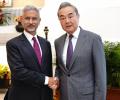
China promised to address three key concerns of India, the sources said.
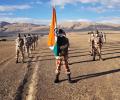
India and China on Friday agreed to hold the next round of military talks at an early date to achieve the objective of complete disengagement in remaining friction points in eastern Ladakh amid fresh sparring between the two sides on the prolonged Line of Actual Control (LAC) standoff.

India's Foreign Secretary Vikram Misri has arrived in Beijing for a two-day visit during which he will hold talks with Chinese officials. The visit comes amid ongoing efforts to de-escalate tensions along the Line of Actual Control (LAC) in eastern Ladakh and to resume bilateral cooperation in various fields, including the Kailash Mansarovar Yatra.

India will look at disengagement and de-escalation of the situation along the Line of Actual Control (LAC) in eastern Ladakh after restoration of the status quo of April 2020, Army Chief General Upendra Dwivedi said on Tuesday, a day after New Delhi announced striking an agreement with Beijing to end the over four-year border row in the region.

Sources said the Indian delegation was warmly greeted by senior officials of the Chinese Army before the talks began.

India's engagement with China is "complex" and Chinese attempts to unilaterally alter the status quo along the Line of Actual Control (LAC) in eastern Ladakh starting from April-May 2020 seriously disturbed the peace and tranquillity in border areas, the ministry of external affairs (MEA) said in a report on Monday.

Prime Minister Manmohan Singh on Sunday left for a five-day visit to Russia and China.
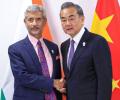
The joint statement said Jaishankar and Wang agreed that both sides should take guidance from the series of consensus reached between leaders of the two countries on developing India-China relations, including not allowing differences to become disputes.
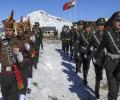
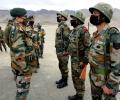
India and China held two days of military talks in an "open and constructive manner" for an early and mutually acceptable resolution of the remaining issues along the Line of Actual Control in eastern Ladakh and agreed to maintain peace on the ground.
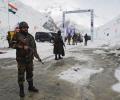
With Beijing remaining intransigent on the withdrawal of additional troops deployed by the People's Liberation Army (PLA) since the deadly border clash in 2020 in eastern Ladakh, India's bilateral ties with China remained frozen in 2023 with no forward movement on the horizon despite several rounds of diplomatic and military talks.

Chinese Foreign Minister Wang Yi said that it is imperative for the two sides to view each other as partners and opportunities rather than rivals or threats, and invest their valuable resources in development and revitalisation.
As per the sources, the discussions between the two sides include pulling back tanks and armoured vehicles from their present positions, and some development in this regard is likely to take place in the next few days.
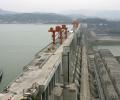
China has approved the construction of the world's largest dam on the Brahmaputra River in Tibet, close to the Indian border. The USD 137 billion project, which is expected to dwarf even China's own Three Gorges Dam, has raised concerns in India and Bangladesh, the downstream riparian states. Concerns in India are centered around China's potential to control water flow, potentially enabling the release of large amounts of water to flood border areas in times of hostilities. The dam is part of China's 14th Five-Year Plan, and the Chinese government claims that the project is safe and prioritizes ecological protection.
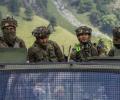
Two days after the India-China military talks, the joint statement, issued in New Delhi by the Indian Army said both sides had a 'candid and in-depth exchange' relating to disengagement along the Line of Actual Control (LAC) in the Western Sector of India-China border areas.
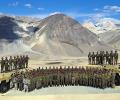
Her comments come a day after External Affairs Minister S Jaishankar said in Geneva that roughly 75 percent of the "disengagement problems" with China are sorted out but the bigger issue has been the increasing militarisation of the frontier.
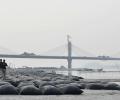
China has formally started the construction of a USD 167.8 billion dam over the Brahmaputra River in Tibet, close to the Indian border in Arunachal Pradesh, raising concerns in India and Bangladesh.
The seventh round of military talks between India and China held on Monday was "positive and constructive", and both sides agreed to earnestly implement the understanding reached by their leaders to not turn differences into disputes, a joint statement by the two armies said on Tuesday.

Defence Minister Rajnath Singh on Thursday held talks with his Chinese counterpart Li Shangfu and is learnt to have discussed the lingering border row in eastern Ladakh.
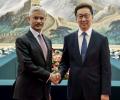
India and China should build on 'good progress' in normalising the bilateral ties to address border-related issues including de-escalation, and it is essential to avoid 'restrictive trade measures and roadblocks', External Affairs Minister S Jaishankar said on Monday during talks with his Chinese counterpart Wang Yi.

The destabilising and corrosive behaviour of the Chinese Community Party in the Indo-Pacific region is simply not helpful and some of the defence infrastructure that is being set up by China near its border with India is alarming, US Army's Pacific Commanding General Charles A Flynn said on Wednesday.
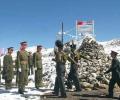
The two sides have already held at least 12 rounds of talks between local commanders and three rounds of talks between major general-rank officials but no positive outcome came out from the discussions, they said.
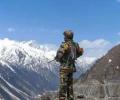
Asserting that sovereignty and territorial integrity of China are "sacred and inviolable", the country's national legislature has adopted a new law on the protection and exploitation of the land border areas, which could have bearing on Beijing's border dispute with India.

Rijiju also hit out at Congress leader Rahul Gandhi, saying that his own party MPs "get uncomfortable" when he speaks in Parliament and are apprehensive that he will do "anap-shanap baatein" and the party will have to bear the consequences.

India and China on Monday began talks to put in place a mechanism for management of the border between the two nations, an issue that has been an irritant in bilateral relations.

The Indian side is expected to present specific proposals at the talks to deescalate tension in Pangong Tso, Galwan Valley and Demchok -- the three areas in eastern Ladakh where the two sides have been on a bitter standoff for last one month, the sources said.

Prime Minister Narendra Modi and Chinese President Xi Jinping are expected to hold bilateral meetings on the sidelines of the SCO summit in Tianjin, as both nations look to strengthen ties amid global trade tensions.
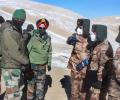
Indian Army Chief General M M Naravane had said on Wednesday that India was hopeful of resolving issues related to disengagement at Patrolling Point 15 (Hot Springs) in eastern Ladakh in the 14th round of talks.
China defends its construction of a dam on the Brahmaputra river in Tibet, addressing concerns from India and Bangladesh about its potential impact on water flow and the environment.
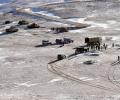
Both countries have reached a mutual agreement for disengagement of troops from the most contentious area of North and South Pangong Lake.
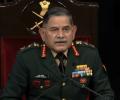
Army Chief General Upendra Dwivedi Monday said there is still a 'degree' of standoff between the Indian and Chinese militaries along the Line of Actual Control in eastern Ladakh and both sides need to sit down and firm up a broader understanding on how to calm down the situation.

United States President Donald Trump has warned that countries aligning with the BRICS economic bloc will face additional 10 per cent tariffs on their goods, as he seeks to protect the dollar's global dominance.

The talks took place over video call on Sunday. According to sources, talks were held for over two hours in a cordial and forward-looking manner.
Ahead of Chinese Premier Wen Jiabao's visit, India and China on Tuesday concluded their 14th round of special representatives border talks, with both sides agreeing to seek a "fair deal" as they made "steady progress" on a framework to resolve the long-running boundary dispute.

Asked about the recent meeting between Modi and Xi, and if Russia had any role in it, Alipov said, "We have not played any role in it, but we are happy that it took place in Kazan... We wholeheartedly welcome the meeting."
India and China have reached a "common understanding" on the progress made so far in their vexed border talks that will provide a framework for drawing a "fair, reasonable and mutually acceptable" boundary, National Security Advisor Shivshankar Menon said on Tuesday.

China on Tuesday confirmed that it has reached an agreement with India to end the standoff between the two armies in eastern Ladakh.

The Indian Army has been matching up to the Chinese build up in both Pangong Tso lake and Galwan Valley, the two locations in Ladakh which have witnessed major reinforcement of troops in the last two weeks, sources said. There was very little chance of easing of tension anytime soon as both sides are aggressively holding onto their respective positions, they said.

India and China have implemented a pact on patrolling in Depsang and Demchok along the Line of Actual Control (LAC) in eastern Ladakh, as per agreed modalities and timelines. The agreement was reached on October 21 and includes provisions for disengagement and patrolling in the last two friction points in the region. The pact has been effected and implemented as agreed, with both sides resuming patrolling activities and grazing, where applicable, as per longstanding practice before the friction began. The terms of the disengagement agreements reached prior to the latest pact continue to hold in relevant areas in eastern Ladakh. The agreement applies mutually to both sides and is without prejudice to India's positions on the LAC or boundary lines. India and China are each carrying out one round of patrolling in Depsang and Demchok, but they have maintained their deployment of troops along the LAC. The focus now is on de-escalation of the overall situation. The agreement was endorsed by Prime Minister Narendra Modi and Chinese President Xi Jinping in a meeting in Kazan, Russia, signaling attempts to normalize ties.

After India firmly told China that its violation of the border pacts has "eroded" the entire basis of bilateral ties, China's defence ministry on Friday said the situation at the border is "generally stable" and both sides should put the boundary issue in an "appropriate position" and promote its transition to "normalised management".

India and China on Thursday vowed to redouble efforts to resolve the remaining issues in eastern Ladakh at the earliest and 'stabilise and rebuild' ties even as External Affairs Minister S Jaishankar conveyed to his Chinese counterpart Wang Yi during a meeting that the Line of Actual Control (LAC) must be respected.
